

Ludwig van Beethoven scores, chords - difficulty level Advanced
Show more
Free scores
Musicians
Instruments
More
Difficulty
Arrangement
More
Genre
More
By popularity
By popularity
Newest releases first
Old releases first

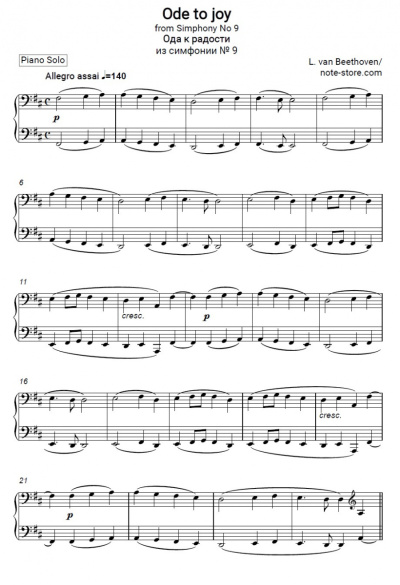
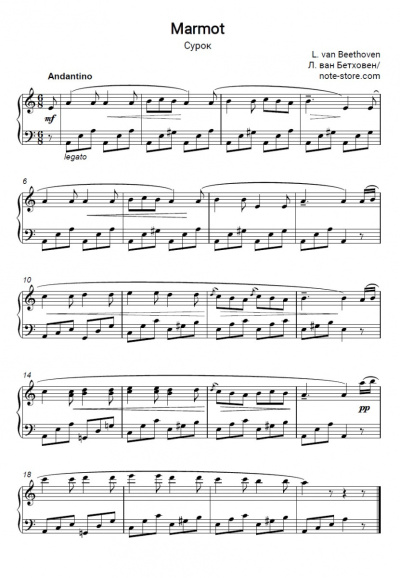

Ludwig van Beethoven was a German composer, baptized on 17 December 1770 in Bonn, who spent most of his creative life in Vienna. He became a central figure of Viennese Classicism and one of the key voices in the transition from classical music to early Romanticism. His active career covered roughly 1790–1827, with especially strong influence in the middle period. Many listeners still learn his music through works that changed the scale, drama, and expressive power of instrumental art. His legacy remains essential for advanced performers.
Beethoven is known for nine symphonies, including Symphony No. 9 in D minor with the choral “Ode to Joy,” 32 piano sonatas, 16 string quartets, piano concertos, the violin concerto, and Missa solemnis. Among the most famous keyboard scores are the “Moonlight,” “Pathétique,” “Waldstein,” and “Appassionata.” His Sonata No. 16 in G Major, Op. 31, No. 1 belongs to a set often linked with the start of his “heroic” phase. This music suits an advanced level musician who wants to play with wit, contrast, elegance, and brilliance.
A major achievement of Beethoven was raising instrumental music, especially the symphony and quartet, to the highest artistic level. Even with progressing hearing loss and later near-total deafness, he continued to compose landmark masterpieces. On this Note-store.com page, you can download sheet music for Sonata No. 16 in ready files for study and performance. Each edition is available in PDF. You can also get MIDI for practice. These materials help you learn each movement clearly. If you want to play Beethoven with confidence, download sheet music here in PDF or use MIDI support to learn at an advanced level.